Explore Marina del Rey
North America's largest man-made small-craft harbor holds more than 4,600 slips between Venice Beach and the Ballona wetlands — a full waterfront neighborhood where the open Pacific starts just past the breakwater.
From tidal marsh to eight basins
Before it held a single boat, this was wetland — the old mouth of the Los Angeles River, which wandered south toward Long Beach long before anyone thought to dig a harbor here. Locals just called it the swamp. A developer named M.L. Wicks tried to build a commercial port on the site in 1887 and went bankrupt within three years. The idea didn't take until a 1949 Army Corps of Engineers plan won federal authorization in 1954, and the finished harbor was dedicated on April 10, 1965. It nearly didn't survive that long: a brutal 1962–63 winter storm tore into the unfinished marina and forced the county to build the detached breakwater that still guards the entrance today.
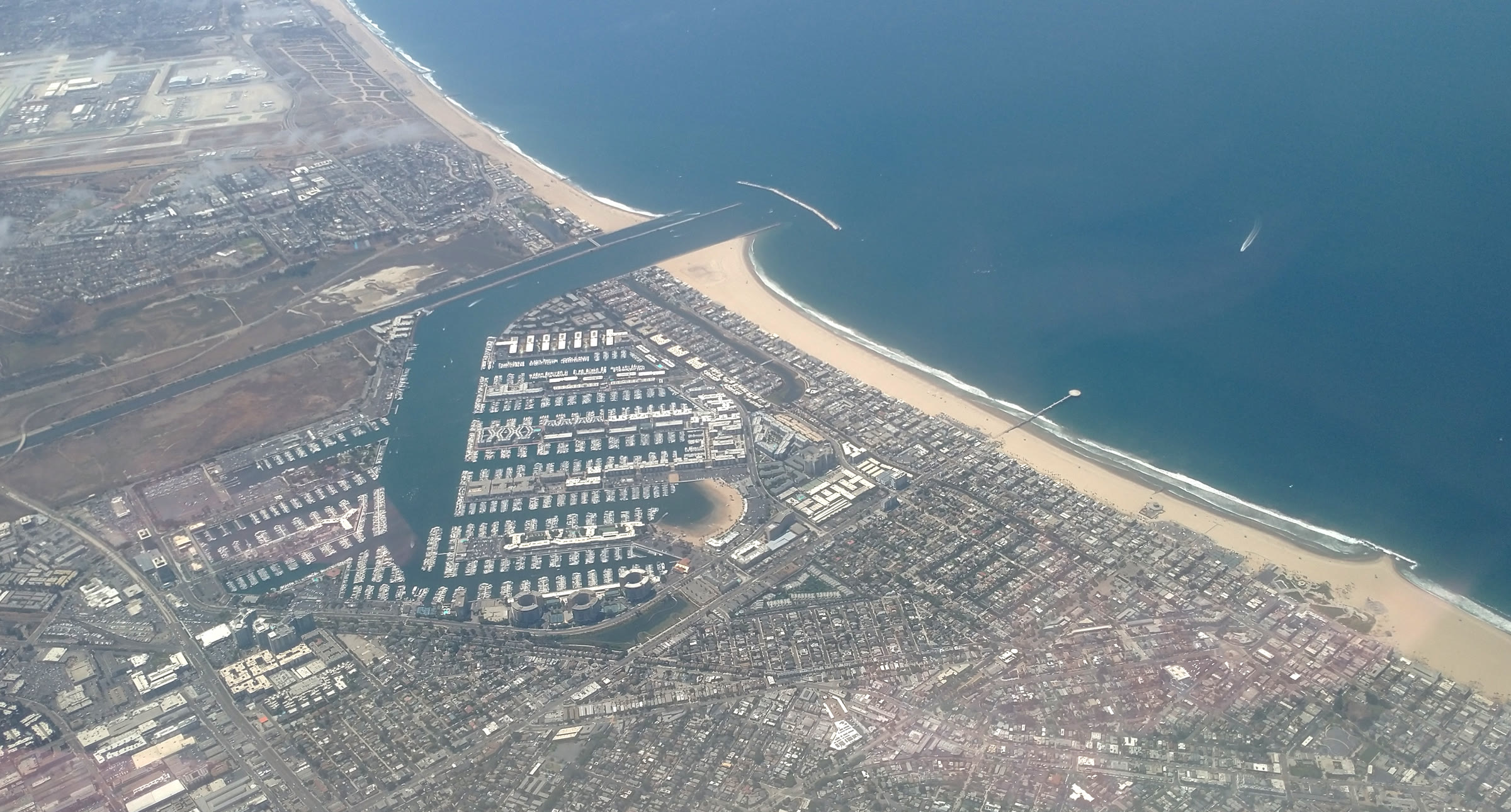
What stands there now is the largest man-made small-craft harbor in North America — roughly 800 acres, about half of it water, with more than 4,600 slips arranged across eight lettered basins and some 22 individual anchorages and marinas. Los Angeles County owns the whole thing and runs it through the Department of Beaches and Harbors, leasing parcels to the private operators who manage the docks, apartments, hotels, and restaurants. That structure means Marina del Rey is both a working harbor and a residential neighborhood of about 11,000 people, ringed by mid-rise towers and palm trees.
The setting is unmistakably Los Angeles. Venice Beach sits immediately north, Playa del Rey and Ballona Creek to the south, Santa Monica four miles up the coast and LAX four miles down — close enough that airliners cross overhead on approach. The harbor itself is a forest of masts and white hulls: weeknight racers out of the yacht clubs, charter boats, paddleboarders working the basins, and sea lions hauled out wherever they can find a float.
Past the breakwater you're in open Santa Monica Bay — Malibu to starboard, and Two Harbors 31 nautical miles off the bow.
Boating from here
Inside the harbor everything moves at five knots — the whole basin is a no-wake zone, and anchoring inside is prohibited, so the water stays flat and orderly. You leave through the Main Channel, 15 to 21 feet deep, between lit jetties and out behind the detached breakwater. Shoaling can build near both jetties, so boats stay outside the marked warning buoys, and winter tides can thin the channel depths — the kind of local knowledge that comes quickly when the harbor is your home port.
Past the breakwater you're in open Santa Monica Bay, and the choices fan out. Day sails run north toward Malibu and Paradise Cove; southerly runs pass Venice Pier and El Segundo down to King Harbor and Palos Verdes; sunset cruises happen right off the entrance. The classic overnight is Catalina — about 31 nautical miles to Two Harbors, 38 to Avalon — with the Channel Islands waiting as the bigger expedition when a shared-schedule weekend opens up.
The practical side is well covered. A fuel dock sits on the west side of the Main Channel at the Basin A entrance, and a public launch ramp in Basin H runs around the clock. The harbor is strictly no-discharge, backed by four pump-out stations, three of them free and open 24 hours. Visiting boats tie up at the Burton Chace Park guest docks — free four-hour docks, plus overnight slips with power, water, showers, and Wi-Fi.
Life between the basins
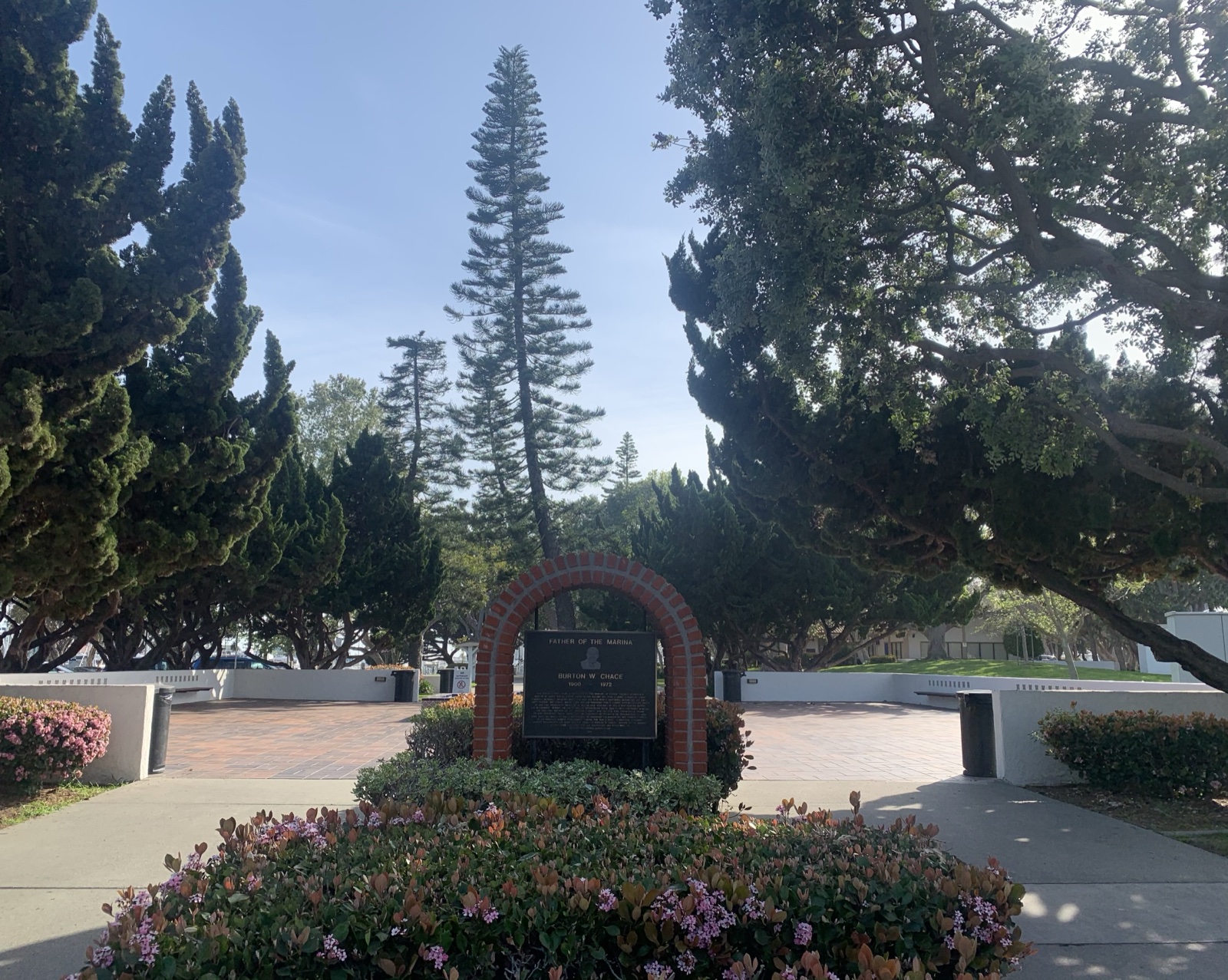
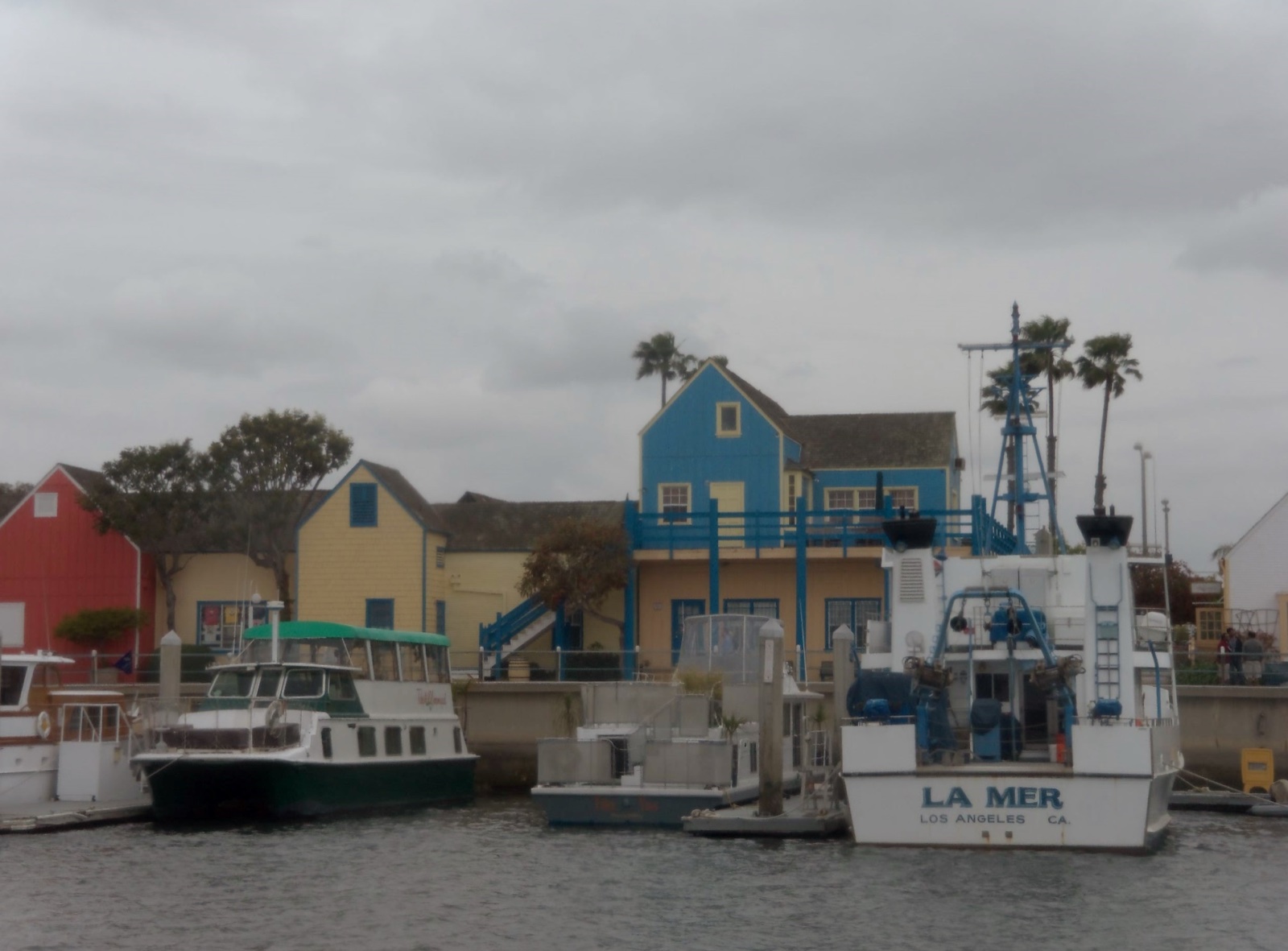
Burton Chace Park anchors the harbor's public life: eight acres of grass on a point between the basins, home to free summer concerts and a December Holiday Boat Parade that has run for more than 60 years. Around the corner on Fiji Way, Fisherman's Village does its best impression of a New England fishing town — shingled storefronts, an iconic lighthouse, and a row of waterfront tables at places like Whiskey Red's and the Lighthouse Grill's walk-up window.
Some of the dining is genuinely boat-first. Killer Shrimp on Admiralty Way keeps its own patron dock, so dinner can end with stepping back aboard; The Warehouse sits next door, and SALT on Bali Way earns its reputation for outdoor tables over the water. Mother's Beach — a calm, protected swimming lagoon inside the harbor — hosts a Saturday farmers market year-round and a free hand launch for kayaks and dinghies. In summer, a WaterBus pontoon shuttles between eight stops around the harbor, from Chace Park to Fisherman's Village.
Underneath the leisure scene is a serious sailing community. California Yacht Club and Del Rey Yacht Club run active programs, sailing schools and rental fleets fill the basins, and the racing calendar keeps weeknights busy. With Venice Beach a walk north, the Ballona Creek bike path along the southern edge, and LAX four miles away, it's one of the most fly-in-accessible harbors on the West Coast — polished and busy rather than salty and remote, and very much alive.